When Phoenix mom Kathy Boltz first heard about Empowerment Scholarship Accounts (ESA) in 2017, she saw a lifeline for her son, who has a disability. Created in 2011, the ESA school voucher program was enacted to help Arizona students with disabilities afford educational services outside of public schools.
At its outset, Boltz said, the voucher program addressed a major roadblock for families like hers: Not every public school is equipped for every disability.
“Some of the original intention [of the program] was that you could use it to pay for therapies that a student with a disability would need,” she said.
Money from the program helped Boltz fund her son’s education instead of forcing her to pay out of pocket. He’s now on track to graduate from a specialized high school.
MORE: Teachers say they feel politically attacked as education funding hangs in limbo
In 2023, though, Boltz started to question whether a universal program was the best approach after the ESA handbook was edited to broaden allowable purchases.
Boltz, a small business owner who’s also on the board of Save Our Schools Arizona, now believes the program has been “extended beyond what I think its original intention was.”
Supporters of ESA expansion say the program gives families more educational freedom and allows funding to follow the student, regardless of income.
But public education advocates—and even some voucher users, like Boltz—say Arizona’s universal school voucher program is no longer merely a means of expanding educational options for disabled students.
They argue that it now subsidizes private education for tens of thousands of wealthy families, potentially costing taxpayers millions of dollars over time, with minimal oversight or accountability.
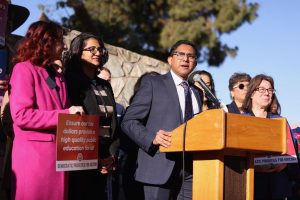
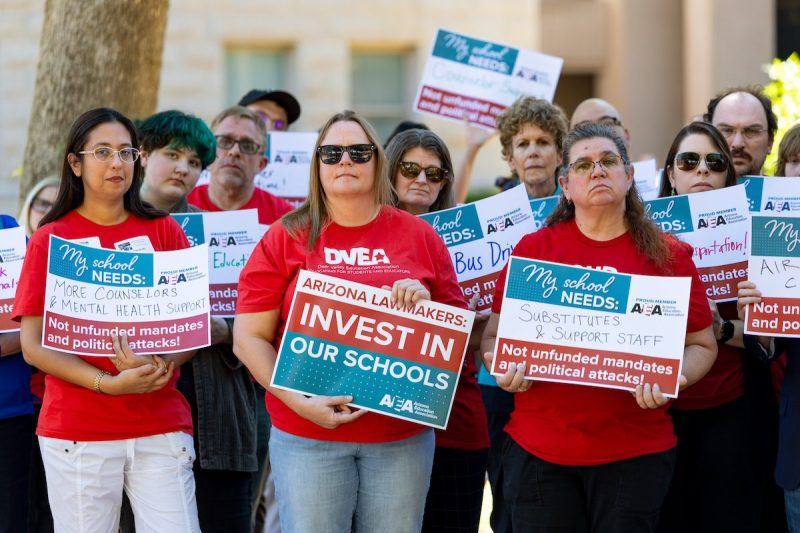
In response to these concerns, advocates with Save Our Schools Arizona and the Arizona Education Association have introduced a new ballot measure: The Protect Education Act, an initiative that could appear before voters in November 2026. The act would address this lack of oversight by limiting school voucher access for households earning over $150,000.
It would also require participating schools to meet accountability standards, like mandating fingerprint clearance for school employees at voucher-funded schools.
Advocates say there should also be clearer spending guidelines and stricter enforcement of approved purchases for families receiving ESA money.
An investigation by 12News found that about 18,000 ESA accounts—roughly 20% of all ESA account holders in the state—were flagged for at least one banned or unallowable purchase per program rules. Those flagged transactions added up to around $10 million. Despite this, only a tiny fraction of account holders were referred for enforcement action.
“[The program] has become so distorted from what the original situation was. We’re paying for people’s European museum trips. Someone went to Petra in Jordan in the Middle East,” Boltz said, referring to the investigation.
The investigation also identified purchases such as gift cards, bounce houses, retail items from Pottery Barn, and gaming consoles.
“We are blowing a tremendous amount of money on this program,” said Boltz. “There need to be rules, and there have been very few rules written by our state Board of Education.”
From targeted program to universal entitlement
School vouchers have been a recurring issue in Arizona for the better part of a decade.
In 2018, voucher expansion was sent for consideration by voters statewide via ballot measure. If approved, Proposition 305 would have expanded the ESA program and made it accessible to all public school students.
Arizona voters vetoed voucher expansion by a wide margin. Nearly 65% of voters rejected it, while only around 35% voted in support. That vote kept the ESA program limited to students with disabilities, students in lower-performing schools, and children of active military members.
In 2022, the Arizona Legislature passed universal school voucher expansion anyway. Then-Gov. Doug Ducey signed the bill into law, making Arizona the first state to offer universal school vouchers regardless of income, disability status, or school district.
Critics say the expansion has meant less money for public schools, which still educate the vast majority of Arizona students, and more spent on private education with minimal accountability standards. They also contend that the program has strayed significantly from its original intent.
“There’s a difference between my child, who has unique needs and an actual disability, and someone who wants to pay for private baseball camp or really wants their tax dollars to go to their favorite religious school,” Boltz said.
Nearly 100,000 students were receiving school vouchers as of late last year, a dramatic increase from the roughly 5,000 students enrolled before the program became universal in 2022. Nonprofit education outlet The 74 reported that 70.6% of ESA enrollees in 2025 were already private school students, and just 18.4% had been in public schools the year prior.
That means Arizona taxpayers are primarily subsidizing private schools that were already being funded by wealthier families instead of expanding educational options and resources for public schools, which still educate the majority of Arizona’s kids.
A push for accountability
Under the Protect Education Act, families making $150,000 or more who want to homeschool their children or send them to private schools would still be able to, but not on the taxpayers’ dollar.
That cap would not apply to families who use vouchers for students with disabilities, to maintain the original intent of the ESA program. Schools would be required to report voucher money they receive, and 90% of unused ESA funds would be returned to public schools.
“You could be a horseback riding school and you could qualify as a qualified school [for ESA spending],” Boltz said. “The Protect Education Act would put a lot more guardrails on spending and require schools to either be accredited or do standardized testing.”
The measure needs more than 250,000 signatures by July 2 to get on the November ballot.
“There is always going to be some population of students that the public school just can’t serve. There are always a few students that the public school will pay tuition for them to attend a private school because it meets their needs better,” Boltz said.
“The intent before the universal stuff was just to help out people who didn’t meet the scope of these large public schools.”
She thinks the best path forward is to reform the program rather than completely abolish it. “There are students who need something different, and there are students who are being well-served—and it just doesn’t make sense to entirely rip that away from people.”