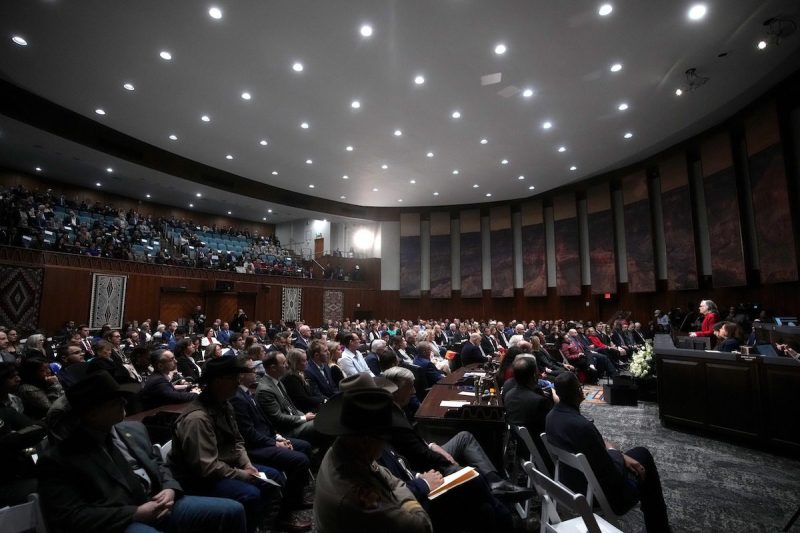
State lawmakers introduced a record number of bills this legislative session, but that doesn’t mean more can’t come along through a commonly used tool at the Arizona Capitol.
The deadline for bills to be introduced in both the Arizona Senate and House of Representatives passed in early February, with lawmakers getting a record-setting 1,966 bills through by their deadlines. New ideas can still be submitted through “strike-everything” amendments, which are often used to fit time-sensitive issues into the current session or retry failed bills.
“Strike-everything” amendments are proposed by lawmakers to remove most of the language in a bill and replace it with something else entirely. If passed by a majority of committee members, the bill becomes transformed.
They visually stand out from other bills, with each receiving a new title in parentheses disclosing what the bill now covers.
Why do lawmakers use ‘strike-everything’ amendments?
“Strike-everything” amendments are a long-standing practice at the Arizona Capitol.
Some critics of the legislative mechanism, including Democratic Gov. Katie Hobbs, argue that “strike-everything” amendments limit the amount of public debate on a bill. Proponents say the tool is necessary to keep the Legislature nimble and be able to respond to current events in real time as opposed to waiting for the next session to roll around in a year.
MORE: Arizona mom pushes for more accountability in school voucher program
Some “strike-everything” amendments maintain their original topic and overhaul a bill significantly rather than replacing it altogether. Other bills introduced in the early days of the session will be written to only make minor changes to statute with the intent of being used for a “strike-everything” amendment at a later point.
The specific type of amendment makes frequent appearances in the last weeks of the legislative session, when lawmakers return to issues that either stalled or were never put up for votes to begin with.
What ‘strike-everything’ amendments have been used this session?
So far this session, “strike-everything” amendments have transformed ballot measures about Arizona‘s minimum wage into teacher union restrictions and morphed diversity, equity and inclusion bans into a law that would place federal immigration agents at polling places.
More than 100 “strike-all amendments” have been proposed so far this session. In March, Republicans made quick use of an amendment to repeal César Chávez Day in Arizona after a New York Times investigation uncovered multiple accusations against the late labor leader of child molestation and sexual assault.
The bill was signed into law the day after Arizona would have commemorated the holiday.
Democratic Rep. Lorena Austin also referenced “strike-everything” amendments in a recent video to constituents, explaining that the procedure allows the minority party to propose their ideas even if its bills aren’t put up for a vote. Democratic-sponsored bills are rarely picked up by committee chairmen, unless they can garner considerable bipartisan support.
Other bills that have been given a new life this session include a bill that originally focused on the state’s citrus, fruit, and vegetable trust fund. It was replaced with a bill to expand property tax relief for veterans with disabilities. A resolution originally intended to allow people facing homelessness to opt out of the state’s minimum wage requirements became a ballot measure looking to bar the use of public funds by teacher unions.
Reporting by Helen Rummel, Arizona Republic