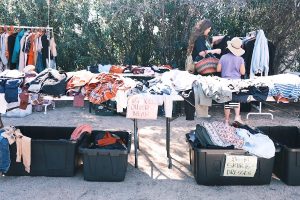
IXTAPAN DE LA SAL, Mexico ― Ingrid Ayón strolled through an open market and sat down at a crowded food stall, wedging herself between diners on stools along the counter.
She ordered a plate of tacos and was about to take a bite when an older woman tapped her on the shoulder.
It was Ayón’s great-aunt, Yolanda Solano, a 73-year-old with graying brown hair tied up in a bun. Ayón’s face lit up at the chance midday encounter with her relative, whom Ayón affectionally greeted in Spanish as “Tia.”
“Why do you have such dark circles under your eyes?” the older woman asked Ayón with a frown.
“It’s because I can’t sleep at night,” Ayón responded.
There was a reason Ayón wasn’t sleeping, and Ayón’s aunt knew it. “It’s because you miss home. You miss it a lot,” the older woman said, offering Ayón a hug.
It had been more than four months since Ayón was deported to Mexico from the United States where she had lived her entire life in Cottonwood in northern Arizona. Her undocumented parents brought her to America when she was 4 months old.
But adjusting to her new life in this town of 36,000 people in central Mexico was not going well.
She often lay in bed crying while thinking of her mother, father, four brothers and four young nephews back in Cottonwood. To comfort herself, she wrapped the arms and legs of a favorite stuffed animal around her neck and body, as if she were receiving a hug from her mom.
She often didn’t get out of bed until late morning. The rest of the day she sat curled in an old chair in her pajamas watching Netflix shows while her grandmother, an aunt and two cousins went off to work.
Her grandma, Vicenta, a stern woman in her mid-60s, was unsympathetic. She was constantly on Ayón’s case, scolding her to get out of the house and find a job. Ayón’s grandma was dealing with her own personal trauma. A son, Edi, Ayón’s uncle, had disappeared in 2020. The family assumed he had been killed by the cartels over a gambling debt involving cockfighting, although his body hasn’t been found.
Ayón thought her grandma probably viewed her as a lazy or entitled American. But Ayón didn’t consider herself that. In Arizona, Ayón had been working since she turned 18. And before she was deported, she had worked two jobs, six days a week. She restocked minibars in hotel rooms at a resort in Sedona. She also bused tables at Colt Grill, a popular barbecue restaurant in Old Town Cottonwood.
What her grandma didn’t understand, Ayón said, was that she was lonely and depressed — not just because of the trauma she had experienced getting deported and separated from her family, but also because of the tough time she was having adjusting to a new life in a country she didn’t know.
“The little town that I’m living in, it’s nice. It’s beautiful. I can’t lie about that,” Ayón said one recent morning sitting in the room she shared with her grandma, as roosters crowed outside.
“But living here, just trying to get used to it, it’s not nice.”
‘Bienvenida.’ A new life begins at Nogales port of entry
Ayón was at work at Colt Grill the July day when federal officers raided the restaurant and three other Colt Grill locations in Yavapai County. The raid was part of a federal probe into a human smuggling operation by the owners. Ayón was among the two dozen or so undocumented workers also arrested.
Ayón had spent more than two months confined behind bars at a detention center in Eloy before asking to be voluntarily returned to Mexico, a less severe form of deportation.
In late September, she and other deportees were loaded on a bus at the detention center in Eloy, transported to Arizona‘s border with Mexico and dropped off at the Nogales port of entry, where Ayón’s new life in Mexico officially began.
At a Mexican reception center for deportees, Ayón was handed a Mexican debit card loaded with about $100 and sent on her way. Ayón spent three days in Nogales with friends of her parents, and then flew with a plane ticket purchased by her parents from Hermosillo to Mexico City. Her aunt and two cousins met her at the airport.
They took a taxi from the airport to Ixtapan de la Sal, a town in the mountains known for its thermal hot springs in the state of Mexico about two hours southwest of the capital.
Ayón was born in Ixtapan de la Sal. But she was an infant when her parents left to seek a better life in the United States. They settled in Cottonwood, where Ayón grew up with her large, tight-knit family and extended family of aunts, uncles and cousins.
It was about 2 a.m. when Ayón arrived in the taxi at her grandma’s house, a multilevel structure made up of unheated rooms adjoined by a narrow outdoor stairway typical in poorer parts of Mexico. Her aunt and cousin had covered a wall in the living room with purple foil balloons and silver letters that spelled out “Bienvenida” — Welcome.
There was no extra bed for her. So Ayón slept with her grandma. It wasn’t until the following morning, when Ayón woke up, that she began “realizing that I’m down here, just really crazy that I’m in Mexico, where I really didn’t grow up, (just) basically was born.”
Separated from her family, she just wonders why
More than four months had passed since that day, and Ayón was still having a tough time in Mexico. The farthest from home she’d ever been before her deportation was Las Vegas.
“It’s really hard for me,” Ayón said. “I feel like I’m worth nothing here. I feel like here, I’m nothing, because I’m not doing anything.”
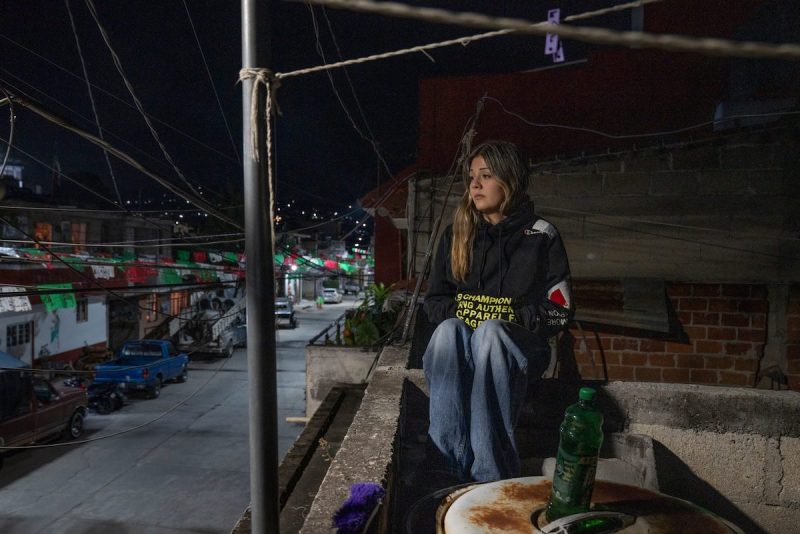
At night, she sometimes climbed up the cement steps to the roof, sat on a ledge overlooking the street and wondered, Why did this happen to me?
She regretted accepting voluntary deportation and wished she had stayed in the Eloy Detention Center longer, fighting to be released in the United States instead of sent to Mexico.
Her only hope now was to be back with her family in Cottonwood. Her former high school counselor in Arizona, Amanda Lange, was trying to help. Lange had created a GoFundMe account to help Ayón hire a lawyer to explore legal options to return to the United States and help her get by financially in Mexico. Supporters had contributed more than $5,200.
Raised as a Jehovah’s Witness, Ayón thought God might be punishing her. In Cottonwood, she liked to go shopping with friends. They sometimes drove to concerts in Phoenix or hung out at bars on weekends.
“I feel like things happen for a reason,” Ayón said. “Like my days off, I would be kind of crazy, going out a lot, making bad choices. So I feel like God put a stop on me and told me that I needed to calm down. So I feel like that’s the reason why I’m here.”
She remembered all the fun times with her family, and how she had taken them for granted. Now, she worried she might never see her family again.
“I think about that all the time,” Ayón said.
Ayón called home every night. Taking turns talking to different family members on video chats helped take away some of the loneliness, Ayón said.
But she often found herself begging her mom and dad to move back to Mexico and live with her.
Ayón’s pleading, however, put her undocumented parents in a horrible dilemma. Joining Ayón in Mexico would mean leaving behind their four other children, the youngest a high schooler, and their four grandchildren, in Cottonwood. Three of their four sons were born in the United States, as were all of the grandkids.
Returning to Mexico would also mean abandoning the life they had built after more than two decades in Cottonwood, where Ayón’s mother cleans hotel rooms in Sedona and her dad owns a landscaping business.
With some of the money he has earned, he has bought quads to cruise around in the desert on weekends. They are not rich by far, but much better off than if they had stayed in Mexico.
“They make good money over there where they’re working,” Ayón said. “And I feel like if they come here, we’re not gonna make enough money. That’s what I feel like they’re scared of to come back.”
As undocumented immigrants, there was always the risk Ayón’s parents might also get picked up by ICE and deported. Ayón’s father had already been deported once. He was in the legal process of fighting a second deportation. A hearing in immigration court was coming up in June. The hearing could determine whether he would be allowed to remain legally in the United States or sent back to Mexico.
Spoken to in Spanish, she had always answered in English
In the small city of Cottonwood, Ayón never felt unsafe. But in Ixtapan de la Sal, Ayón feared leaving her grandma’s house.
As a young woman unfamiliar with Mexico, she could not picture herself walking to and from a job alone, especially after dark. Stray dogs roamed in the street freely, lying in the road or foraging for food in the trash. But it wasn’t the stray dogs that concerned her.
“I feel like I’m a big target, especially me being a woman, a young woman,” Ayón said.
Ayón also stuck out. Maybe it was her fair skin, or the blond highlights in her hair. Maybe it was the wide-legged pants she favored over the tight jeans young Mexican women her age wore. Or maybe it was the bright yellow backpack she carried in the form of the dog “Jake” from the cartoon “Adventure Time,” a reminder of her childhood growing up in Cottonwood.
Whatever it was, Ayón could feel the stares whenever she did venture out. At the little store around the corner where Ayón sometimes wandered over to buy Coke, young boys yelled at her as soon as they spotted her on the street: Gringa! Gringa! Gringa!
She also was not used to the catcalls from men on the street: “Güera, come here!”
Ayón also didn’t think her Spanish was up to snuff to work in Mexico, even for basic jobs like busing tables. Growing up in Cottonwood, her parents had spoken to her only in Spanish. Ayón always answered them in English.
She also had never learned to read or write in Spanish. The Mexican currency also baffled her. In high school in Cottonwood, Ayón received instruction in a program for students with learning disabilities.
“I don’t learn as quick as other people,” Ayón said. “I’m pretty slow.”
Missing her immediate family, it’s hard to move ahead
Ayón’s grandma cleans other people’s houses for a living. One day in February, she gave Ayón a task before leaving the house. She asked Ayón to hang her wet laundry on the clotheslines on the roof and then to take the laundry down when it was dry.
Ayón hung the laundry as told. But later that morning, Ayón decided to walk to the town center with some visitors. She forgot about the laundry on the roof.
Ayón navigated her way through the crumbling streets carrying her yellow “Adventure Time” backpack. There was a look of nervousness on her face.
After about a mile, she arrived at the central plaza, which was dominated by a tall monument to a band of martyrs who died defending the town against invading Zapatistas in 1912.
Ayón’s face brightened when she stopped to chat with her aunt, Yolanda Solano, and her uncle, Jorge Medina. They sell candy from one of the street stalls that line the plaza.
Building a new life in Mexico for Ayón would be difficult, her uncle, 73, said.
“She’s not accustomed to life here like us,” he said. “She’s looking for something better than what we have here.”
Ayón walked across the street to say hi to her 25-year-old cousin, Yulieth Ayón. She was busy selling souvenirs at a shop owned by her boyfriend’s family.
Yulieth lives in the same house as Ayón. It pained her to see Ayón so sad and depressed. She tried to cheer her up, but it didn’t help.
“I tell her, ‘Come on, Mexico is beautiful,’” Yulieth said. “But she loves her family and she misses them so much. And I understand, it’s not like when you come here on vacation. It’s very different having to stay. Very different. She’s not happy with the idea that she can’t go back.”
The day started off warm and sunny. But that evening, a thunderstorm rolled in and it poured. What’s more, her grandma’s little black dog, Chino, had yanked the clothing off the line.
That night, when Ayón’s grandma got home from cleaning houses, she found her laundry heaped on the roof. It was soaking wet.
“She was so mad,” Ayón said.
‘This isn’t her place here. She’s been there her whole life’
The next morning, Ayón got up around 10 and fixed herself some eggs and beans. She then walked up to the roof to hang her own laundry out to dry.
Later that afternoon, Ayón decided to walk over to another aunt’s house for lunch. Diana Ayón, her father’s sister, was cooking pasta in her kitchen when Ayón arrived.
They waited until Ayón’s grandma showed up to sit down at the table. Ayón’s grandma was in no mood to visit. She barely spoke.
After lunch, Ayón’s aunt, Diana, said she couldn’t understand why the United States had deported her niece.
“What the government did was wrong, because they took her away from her family, so to speak,” Diana Ayón said in Spanish. “This isn’t her place here. She’s been there her whole life, and that is where she belongs. Her parents stayed there, her brothers. It’s depressing for her to be here.”
“Depression can lead to millions of things,” Diana added, “There are young people who attempt to take their own lives because they are unhappy where they are.”
After lunch, Ayón stopped to visit another great-aunt, 69-year-old Lilia Solano, who lives in a small green house with her son, 52-year-old Alberto Angel Flores.
While Ayón was knocking on the door, she spotted the two coming down the street. Alberto was hobbling on a pair of crutches.
Ayón shared a bond with Lilia and Alberto. Both of them had once lived and worked in Sedona. Like Ayón, they also had been deported.
Lilia had cleaned houses and was the caretaker of an older woman for 17 years. She was deported in 2010 after being pulled over by police for a stop sign violation. Alberto worked in construction for 20 years. He said he was deported in 2013 after he was stopped for speeding.
Life had been hard for them in Mexico after the deportations.
Alberto now made a living as a garbage collector, earning 3,000 pesos every two weeks. It broke down to about $166, or $11 a day.
Inside, Alberto sat on a chair and took off his sock. His ankle was swollen like a balloon, and there was a 1-inch red scar left over from a recent leg surgery.
Two months earlier, Alberto had fallen off his garbage truck. His foot and leg were crushed. He had been unable to work since.
It may be beautiful, but Mexico doesn’t feel like home
That evening, when Ayón returned to her grandma’s house, she smelled smoke. Her other cousin, 21-year-old Alan, had just returned home from his job working on a roadside landscaping crew. He still had on his fluorescent orange work pants.
“You left the beans burning on the stove,” Alan told her.
Ayón knew she was in trouble.
That night, when Ayón’s grandma came home, she asked, who burned the beans. Alan took the blame.
“You owe me,” he whispered to Ayón.
“I’ll let you use my Hulu account,” Ayón told him.
The conflict between Ayón and her grandma seemed to represent something larger. Perhaps it reflected the conflict between letting go of her old life in Cottonwood and accepting her new life in Mexico. Maybe she still couldn’t see the beauty her cousin Yulieth told her that Mexico, with all of its hardships, had to offer.
It’s time to move forward, get a job, family in Mexico says
There was a street fair that night in the neighborhood. Ayón and Yulieth made plans to walk over.
Before they left, Ayón heard her aunt, Maria del Carmen Najera, in the kitchen. They rarely saw each other even though her aunt lived in the same house. The hospital where she worked was short-staffed, and Maria, a nurse, often worked double shifts.
Ayón began to cry, recounting her troubles with her grandma and how miserable she felt away from her family in America.
Maria gave Ayón some advice. She suggested Ayón find a job to keep busy.
“As long as you keep your mind occupied, everything you’re going through will pass, little by little,” Maria said.
Some people experience far worse than what she was going through, her aunt added.
“I want you to thank God,” Maria said, “because you are healthy. You are alive. You have your whole body, you haven’t lost an arm or leg.”
Maria told Ayón to “stay calm. Don’t make any hasty decisions” like trying to go back to the United States illegally. Have faith, you will see your family again. Find a stable job, and maybe then you can get a visa return to America legally.
“Think positively,” she said, “so that everything turns out well, and sooner or later, you can be together.”
The street fair ended with a huge fireworks display from a 20-foot tower. Showers of pink and purple sparks rained down onto the street. Standing in the crowd, Ayón watched the spectacle alongside Yulieth.
The flashes from the fireworks reflected on their faces. Yulieth’s was laughing.
On Ayón’s face — a small smile.
Reporting by Daniel González, Arizona Republic