Three female veterans reflect on their experiences of sexual abuse in the military and worry that Defense Secretary Pete Hegseth’s termination of a committee focused on preventing sexual assault could worsen conditions for women in uniform.
Editor’s note: This story includes references to sexual assault and abuse within the military. It may not be suitable for all readers.
The first time Selina Cardenas was sexually harassed in the military, she was just 19 years old.
A new Marine Corp enlistee, the Arizona native from Phoenix was chatting with a master gunnery sergeant—a senior enlisted advisor who provides leadership and technical expertise—when he made an inappropriate comment. He told Cardenas to consider prostitution to earn money, she said.
On other occasions, she’d wake up to drunk service members banging on her door in the middle of the night. She said this happened almost weekly. As a new Marine, her fellow female soldiers advised her to get used to it, as it was a regular occurrence for the women.
The harassment Cardenas endured ultimately escalated.
A year later, at just 20 years old, she was “violently” raped by a staff sergeant after a night out with friends, she said. The group went back to the barracks, and the staff sergeant forced himself onto her, ignoring her pleas for him to stop.
She recalled trying to push him off, but he was much larger than her physically and her attempts were futile.
“I’m telling him he’s hurting me, I don’t want to do this. He’s telling me that ‘it’s faster, easier to just go through with it and get it over with,’” she recalled. “I just laid there. I was like 115 pounds, [he’s] like 250 [pounds], there’s no way I was gonna fight him off.”
She had to work with him the next day as if nothing happened. By then, she understood the deeply rooted culture of sexual violence in the military and chose not to report her rape.
Cardenas worries the crisis of sexual assault of women in the military will only worsen after US Defense Secretary Pete Hegseth last month terminated the Defense Advisory Committee on Women in the Services (DACOWITS), which provides advice and recommendations on policies relating to the recruitment, retention, employment, integration, well-being, and treatment of women in the military.
The committee in recent years had increasingly focused on the prevention of sexual assault and harassment, better gender equality and integration, advancing career progression, and addressing concerns related to women’s health and wellbeing.
“To see Hegseth do away with this committee, [which] has done so much for women, and basically say it causes all these lies and division, is absolute bullshit,” Cardenas said.
In a tweet, the press secretary for the Department of Defense, now renamed the Department of War, said the committee is advancing a “divisive feminist agenda that hurts combat readiness.”
At a speech at Quantico, Virginia, last week, Hegseth also said that Military Equal Opportunity policies—which allow servicemembers to report discrimination and harassment—will be overhauled.
The office will eliminate anonymous reporting and replace it with a confidential complaint system. Anonymous reporting allows service members to file complaints without providing identifying information, while confidential complaints require the source to provide their information.
“No more frivolous complaints. No more anonymous complaints, no more repeat complaints, no more smearing reputations. No more walking on eggshells,” Hegseth, who has been accused of sexual assault, said.
During his confirmation hearing before the US Senate Armed Services Committee, Hegseth told US Sen. Elizabeth Warren (D-Massachusetts) that he paid a confidential settlement of $50,000 to a woman who accused him of sexually assaulting her at a Republican women’s conference in Monterey, California, in October 2017. He denied ever assaulting her, however.
“To see someone like him, who’s been accused of sexual assault, of abusing women, up there in front of us and telling everybody this committee is spreading lies or causing division, and to discount every single woman who has been assaulted in the military—it’s frustrating,” Cardenas said.
About 1 in 3 female veterans report experiencing sexual trauma during their time of service, but the real number could be higher as researchers find the majority of incidents, like Cardenas’, often go unreported.
After her rape, Cardenas began taking extra precautions to avoid assault, including barricading her door in the barracks or asking friends to pretend to be her boyfriend.
It didn’t work.
At 21 years old, Cardenas forgot to lock her door one night and a sergeant walked into her room—uninvited—as she was exiting a shower.
Cardenas knew the sergeant was a risk for some time. She had previously complained about him—privately—to others, including those above her rank, but they advised her to just ignore him, calling his actions those of a “harmless crush,” she said.
It wasn’t harmless. That night, he stayed in her room for three hours, leaving Cardenas feeling “trapped,” she said. He attempted to coerce Cardenas to sleep with him, and she eventually promised to go on a date with him if he left. He did.
“Sometimes it’s just easier to get out of there and to move on, because no one’s going to believe you,” she said.
Months later, while at sea between Japan and Korea, two servicemembers entered her barrack and climbed on top of her, assaulting her, she said. After that experience, she offered to let a fellow male marine borrow her iPod in exchange for him watching over her as she slept. He agreed, Cardenas said.
“All these precautions that I did, a man never had to do that, but I had to, and I still got assaulted,” she said. “It happens every single day.”
The Department of Defense did not respond to a request for comment for this story.
A fear of retaliation
Arizona veteran Joanna Sweatt served 10 years in the US Marine Corps and was raped three times during her service, she told the Copper Courier.
The first time Sweatt was raped was by a fellow Marine who’d offered to join her all-girls vacation to “protect” the women. He raped her during that same trip, Sweatt said.
When she consulted with a “father-like” figure in her unit about what happened to her, he advised her against reporting her rape, she said. Not because he didn’t find it appalling, but because he knew it could hinder her career, Sweatt recalled.
A report from Human Rights Watch (HRW) found that military personnel who report sexual assault are 12 times as likely to experience some form of retaliation, including both social and professional retaliation.
Examples of professional retaliation include receiving negative performance reviews, which can hinder a servicemember’s path to promotion, risking future success in the military. In other instances, victims have been punished with extra physical training or duties to the point of distress. Some soldiers have even found themselves harassed and cyberbullied by their peers after reporting their assaults.
The second and third times Cardenas was raped were by fellow soldiers she considered friends. Sweatt, who was nine months pregnant at the time, was leaving Okinawa, Japan—where she was stationed—to give birth.
The two men, whom she confided in about her previous rape, raped her on separate occasions before she left the island to give birth, she said.
“They sat in rooms and talked with me about this culture, and [said] ‘I would never let that happen to you.’” she said. “But then when they get an opportunity, [when] they know they have the power and they’re bad, they’re going to use it.”
That’s why Sweatt, who now lives in Chandler, is concerned about the changes made by Hegseth and the impact they could have on female Marines who want to serve their country while also fending off sexual harassment.
“Hegseth’s new directives risk turning back decades of progress for women and survivors in the military,” Sweatt said.
Air force veteran Melissa Cordero, who lives in Tucson, said she was raped twice in her eight years of service.
Cordero, who identifies as a member of the LGBTQ+ community, often had to hide her relationships with women during her service. One night, she was secretly flirting with a fellow female servicemember, unaware she was married. The husband—also in the armed forces —- later raped her, Cordero said.
When she tried to report it, she, like Sweatt, was advised against it and told it would only hurt her career. She moved on like nothing happened, not wanting anything to hinder her success in the armed forces.
The second time she was raped occurred at a military base as they were about to deploy. Cordero said she inadvertently embarrassed a fellow soldier she considered a friend, and he raped her in retaliation.
By then, she knew reporting it wasn’t an option.
“I just dusted myself off and kept moving, because I didn’t want to be taken off the deployment,” she said.
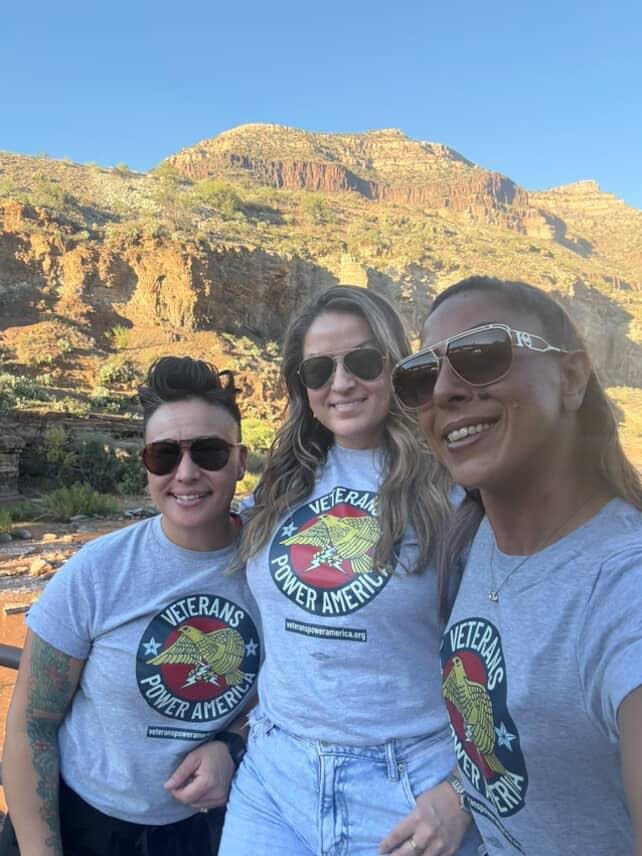
Cordero said Hegseth’s decisions risk “bringing back rape culture,” and throwing years of progress out the window.
“This is not the military. That is not how good military leaders lead,” she said.
When Cordero re-entered civilian life, she leaned into therapy to overcome her PTSD. Through therapy, she was able to understand the deep impact her rapes had, and how they affect her day-to-day life, especially her relationships.
It’s an uphill battle, but the three women, now organizers with Common Defense, have found healing in different ways, especially by engaging in advocacy to ensure no woman experiences what they did.
“We find community in speaking up and finding each other,” Cordero said.
“In building power,” Sweatt added.