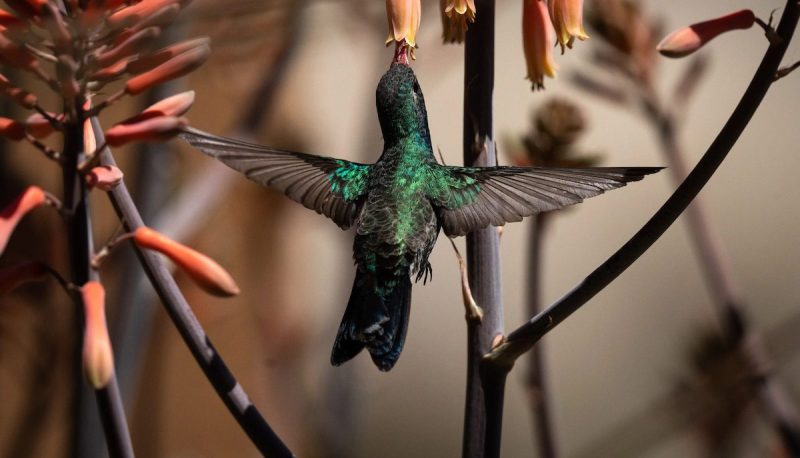
Why watch Blue Jays, Cardinals or even owls, when you can try to spot one of the smallest birds? Every year, several species of hummingbirds travel incredible distances between their breeding grounds in North America and their winter homes farther south.
Hummingbirds migrate mainly because of food availability. Their diet depends heavily on flower nectar and tiny insects, both of which become scarce during colder months.
As temperatures drop and flowers stop blooming, hummingbirds move to warmer regions where nectar is still plentiful. When spring returns and flowers begin blooming again in the north, they migrate back to breed and raise their young.
Migration timing is closely linked to daylight length, temperature and blooming plants along their route. Birdwatchers often spot them stopping at feeders or gardens during these seasonal journeys, making migration an exciting time to observe these remarkable birds.
Here is everything to know about hummingbird migration season.
What are the dates of hummingbird migration?
Hummingbird migration dates vary depending on the species and their breeding range.
In North America, many hummingbirds migrate in response to changes in daylight and food availability. Generally, hummingbirds start their northward migration in late winter or early spring, typically from February to May, according to the National Audubon Society.
Fall migration back to warmer climates typically occurs from August to October.
But not all hummingbirds migrate. Some species, like the Anna’s hummingbird that’s common in Arizona, remain in their breeding territories year-round.
Hummingbird migration map 2026
Here’s the spring 2026 hummingbird migration map from hummingbirdcentral.com.
How far does a hummingbird fly in one day during migration?
According to Hummingbird Central, a hummingbird can travel as much as 23 miles in one day. However, during migration, they may cover up to 500 miles at a time.
What states do hummingbirds migrate to?
Hummingbirds migrate between breeding areas, mostly in the U.S. and Canada, and warmer wintering areas, mainly Mexico, Central America and sometimes the southern U.S. The exact states they migrate to depend on the species.
You’ll see year-round or winter hummingbirds in Texas, Arizona, California and Florida. Species like the Anna’s Hummingbird often stay year-round in California and parts of Arizona.
Spring-to-summer breeding states include Colorado, Pennsylvania, Oregon, New York and Minnesota, to name a few.
The most widespread species is the Ruby-throated Hummingbird, which breeds across the eastern United States.
What is the best time to see hummingbirds in Arizona?
Hummingbirds can typically be seen in Arizona from late February through early September. The peak season for hummingbird activity in Arizona is April through June, according to the Southeastern Arizona Bird Observatory.
What is a flock of hummingbirds called?
A group of hummingbirds is most commonly called a charm due to their shimmering colors and rapid, delicate movements. Others might refer to them as a bouquet, glittering, a buzz, shimmer, a tune or a hover.
What are 5 facts about hummingbirds?
Here are five fun facts from the National Audubon Society:
- Ruby-throats only weigh about as much as a penny.
- Hummingbird eggs are about the size of a coffee bean. Their eggs weigh less than 1 gram.
- A Ruby-throat’s heart races as fast as 20 beats a second, and its resting body temperature sits at about 102 degrees.
- Hummingbirds often have a very short lifespan; most do not live longer than a single year, and those who are lucky enough can live up to four years.
- Hummingbirds have such underdeveloped legs that they are unable to walk or hop.
Reporting by Tiffany Acosta, Arizona Republic