Want news like this in your inbox? Sign up for The Copper Courier’s free newsletter here.
Over a dozen schools in Arizona have closed or will close at the end of the 2024-25 school year. Here’s what you need to know.
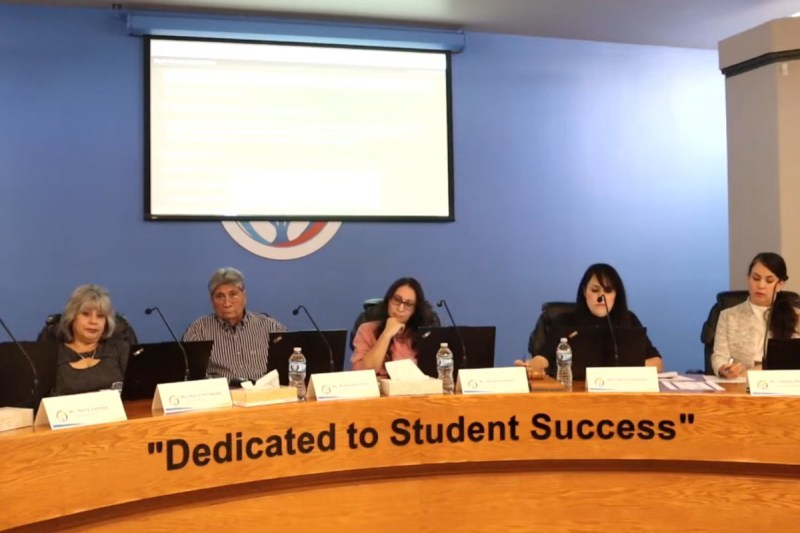
How does it happen? Schools in Arizona can be closed by a vote from the district’s governing board.
What happens to the students? When a school is closed the students have to transfer to another school in the district, which increases class sizes and gives instructors less time to work with each student.
Which schools are closing? The Cave Creek, Paradise Valley, Roosevelt, and Isaac school districts have all closed or plan to close schools:
- The Cave Creek Unified School District is closing Lone Mountain Elementary and Desert Sun Academy in July.
- The Paradise Valley Unified School District closed Sunset Canyon Elementary, Desert Springs Prep Elementary, and Vista Verde Middle School in July 2024.
- The Roosevelt School District is closing Maxine O. Bush Elementary, John R. Davis Elementary, C.J. Jorgensen Academy of Service Learning, Martin Luther King Jr. Elementary, and V.H. Lassen Academy of Science and Nutrition in August.
- The Isaac School District is planning on closing Moya Elementary, P.T. Coe Elementary, and Isaac Online Prep Academy after the 2024-2025 school year.
Why does it happen? School boards typically vote to close schools when enrollment declines.
Declining enrollment doesn’t happen overnight. It happens over years, and in this case, it’s a victory lap for people who’ve made a concentrated effort to hamstring public schools in Arizona. Under the guise of so-called “school choice” vouchers, state and local politicians have directed taxpayer funding away from public schools and into supporting private schools.
READ MORE: It’s not just today—Arizona schools have had funding issues for decades
Vouchers allow families to essentially take money out of the public school system and use it to pay for a student’s private school.
In theory, this would allow families who don’t have access to private schools to “choose” the best school, public or private, to suit their child’s needs. In reality, school choice vouchers have proven to simply pick up the tab for students already attending private schools—and not increase access for all students.
That’s because unlike public schools, private schools can choose which students they admit—allowing them to select the number and type of students they feel are ideal to their school community. There’s also evidence that when vouchers pay for private schools, private schools increase their tuition—reducing the impact of the voucher for families that couldn’t otherwise afford the school.
A 2024 report from the Learning Policy Institute showed that 52% of students in Arizona’s voucher program were never enrolled in public education. That same report noted that vouchers led to per-pupil funding in public schools dropping from $15,565 in 2021-22 to $9,782 in 2023-24.
Vouchers were a primary force in creating a $1.4 billion budget shortfall in Arizona in 2024. To fix that deficit, Arizona’s lawmakers made cuts to state programs and projects—like water infrastructure programs, highway expansions and repairs, and even improvements to air conditioning in state prisons.